

Electro (estim) Acupuncture
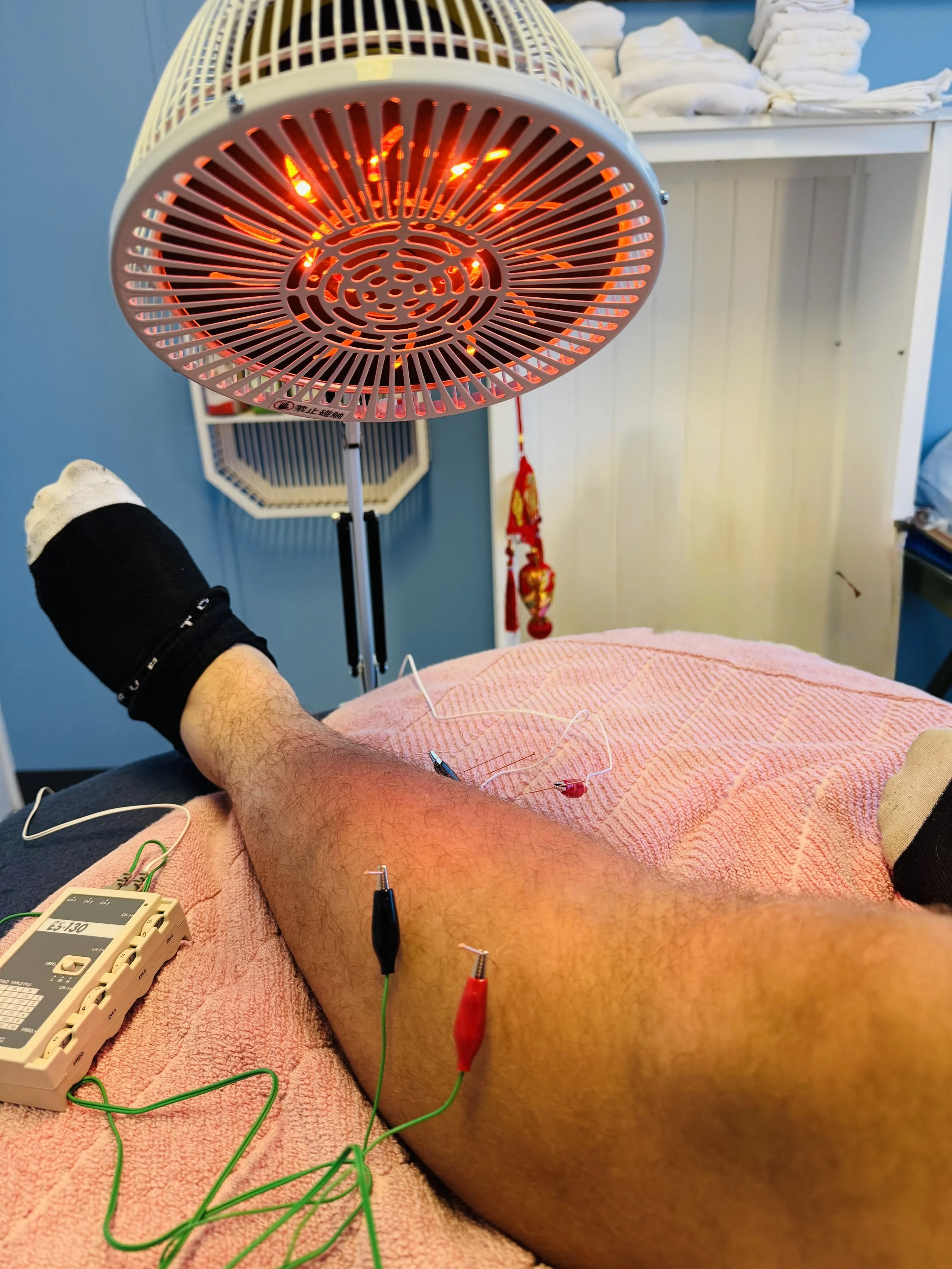
Using an electrical stimulation onto acupuncture needles, on nerve motor points is a great way to help tight muscles and degrading bone health. Using electro acupuncture for shin splints, a muscle contraction in the legs, is an ideal treatment to release the tight muscle.
Electroacupuncture is a modern development of traditional acupuncture that combines acupuncture needling with gentle electrical stimulation.
While acupuncture has been practised in China for thousands of years, electroacupuncture developed much more recently, with its modern clinical use emerging in China during the mid-20th century. It was developed as a way of providing acupuncture needles with a consistent, controlled form of stimulation rather than relying solely on manual needle manipulation.
At Willow Tree Acupuncture, electroacupuncture is selected when clinically appropriate and tailored to each individual's needs and treatment goals.
❋ What to expect
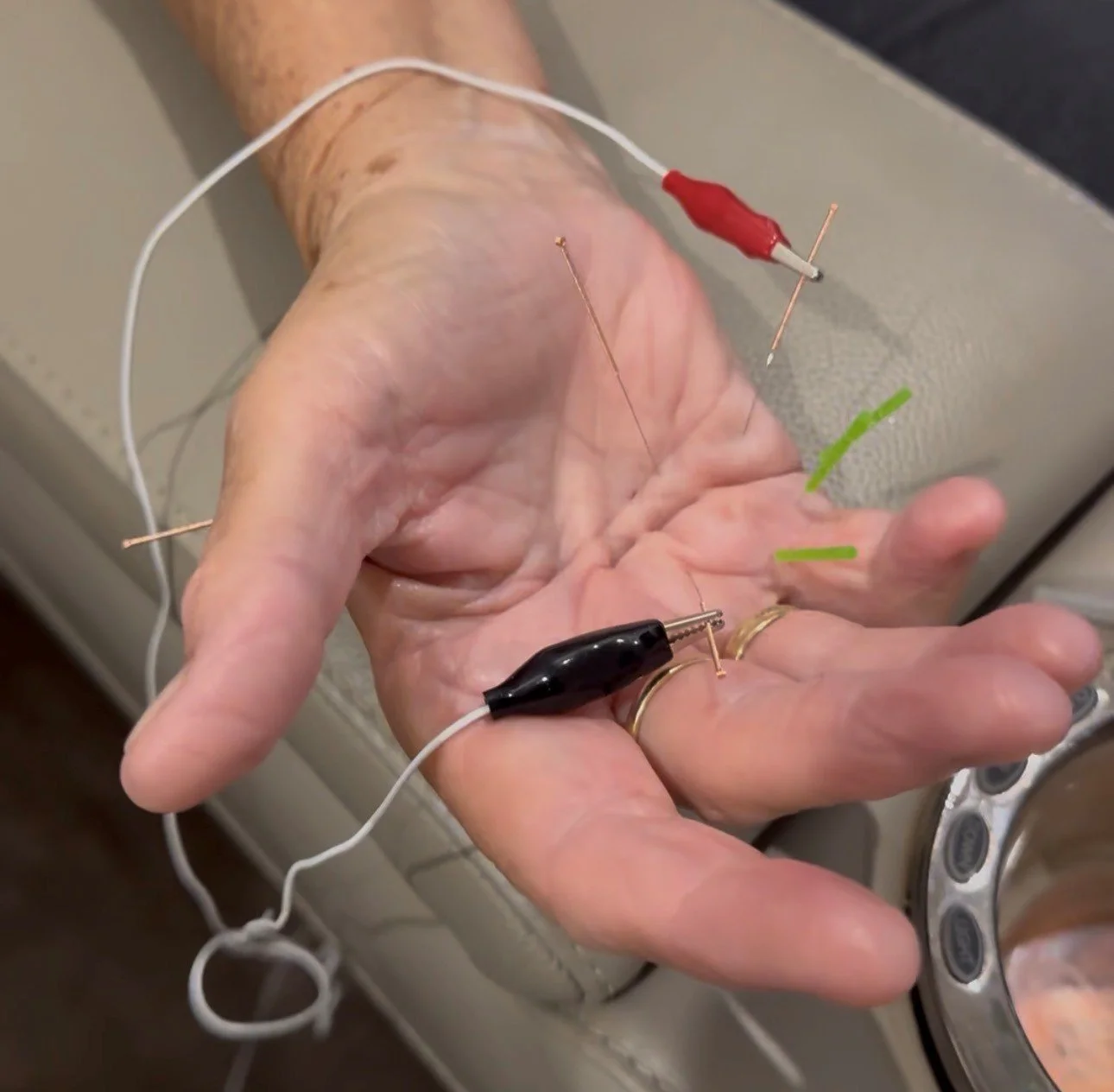
During treatment, acupuncture needles are inserted into carefully selected points and small clips from an electroacupuncture device are attached to some of the needles. A low-level electrical current is then passed between them. The frequency and intensity can be adjusted depending on the treatment being performed.
❋ What does it feel like?
Patients usually describe the sensation as a gentle pulsing, tapping or tingling. When muscles are being targeted, you may also notice a mild rhythmic muscle contraction. Treatment should remain comfortable and is adjusted to the individual.
❋ What is electro acupuncture used for?
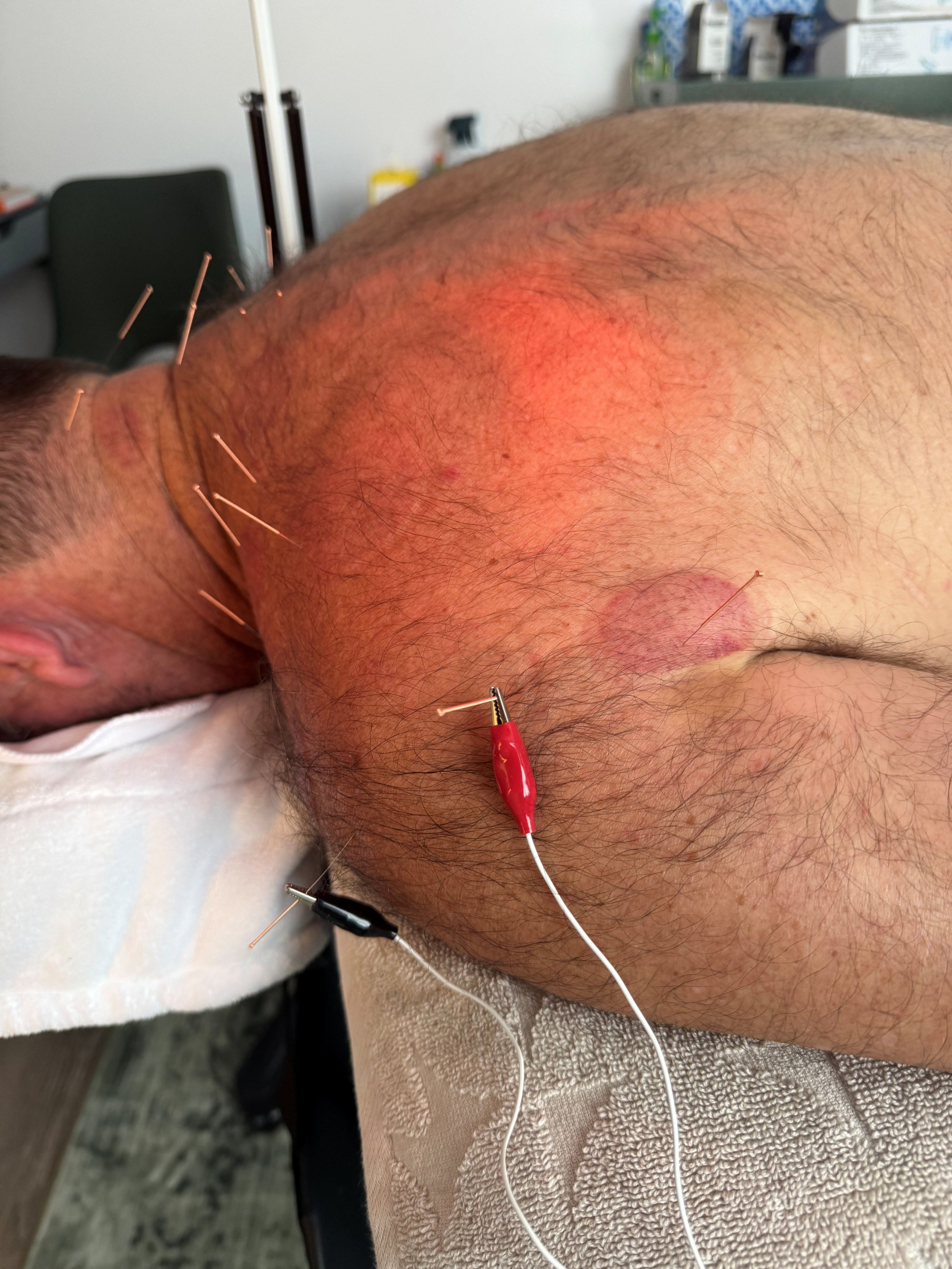
Electroacupuncture is particularly useful when a practitioner wants to provide continuous and controlled stimulation to acupuncture points, muscles or surrounding tissues.
It may be incorporated into acupuncture treatment for:
Musculoskeletal pain, including some presentations of back, neck, shoulder and knee pain
Tight or painful muscles and muscle spasm
Trigger-point and motor-point treatment
Some nerve-related pain and symptoms
Osteoarthritis-related pain, particularly knee osteoarthritis
Rehabilitation and recovery, where appropriate
Post-operative pain management as part of a broader healthcare plan